Biocracked
←

#animal study

1 article
Approach: macro science (with a conceptual split). Palette: D, bold color field.

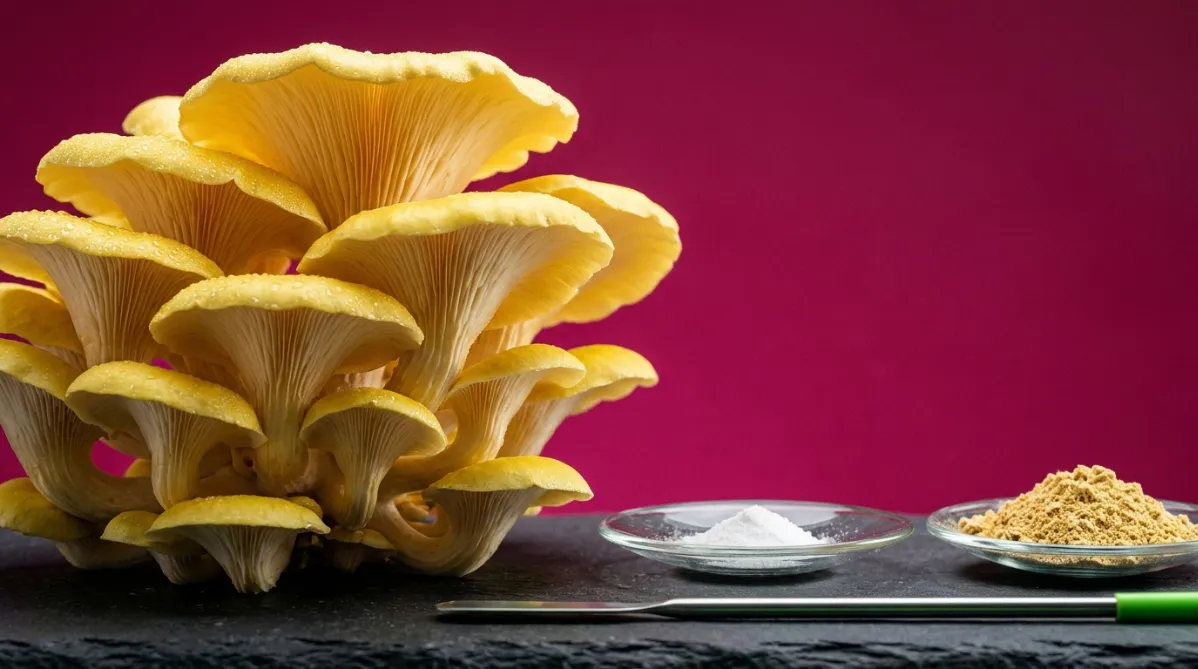
Extreme close-up photograph of a cluster of golden oyster mushrooms (Tamogitake), their ruffled, canary-yellow caps and fine gill structures sharply detailed, shot at a slight low three-quarter angle against a saturated magenta backdrop. In the foreground, a small glass watch dish holds a pinch of fine white crystalline powder, the isolated compound, sitting plain and inert beside a heap of fawn-yellow dried mushroom powder in a second dish. Soft directional studio light from the upper left gives the caps a translucent glow and creates crisp, short shadows. Tiny dew-like droplets cling to the gills. A single thin electric green stem of a lab spatula glints at the edge of the frame. Mood: curious, vivid, quietly skeptical, with the mushroom clearly outshining the isolate. No text or labels.
research

Tato houba snížila tuk v játrech u hlodavců – její hvězdná sloučenina ne

BY NOVA CHEN ·

Ergothionein je látka, kterou často přisuzují zdraví prospěšné účinky hub, ale nová studie na krysách a myších tuto představu komplikuje. Zvířata krmená práškem ze zlaté ústřičné houby (Tamogitake) měla v játrech méně cholesterolu a triglyceridů, zatímco skupina podaná čistým ergothioneinem takové změny neukázala. Houba také zvýšila vylučování cholesterolu a volných mastných kyselin ve stolici – efekt, který izolát nepřinesl. Autoři proto upozorňují, že účinky nelze připisovat jen ergothioneinu. Výzkum byl proveden jen na hlodavcích a houba tvořila až 5 % jejich stravy, takže nelze přímo přenést výsledky na lidskou výživu.

This page is available in